
Why BJJ Practitioners Should Learn Catch Wrestling
How Catch Wrestling Can Make Your BJJ More Complete
Brazilian Jiu-Jitsu has become one of the most effective grappling arts in the world. Its emphasis on leverage, positional control, escapes, submissions, and technique has made it a cornerstone of modern submission grappling and MMA.
But there is another grappling tradition that can add an entirely different dimension to a BJJ practitioner’s game:
Catch Wrestling.
Learning Catch Wrestling doesn’t mean abandoning Brazilian Jiu-Jitsu or deciding that one grappling art is better than another. Instead, it gives a BJJ practitioner another set of tools, another way of thinking, and another approach to controlling and submitting an opponent.
Catch Wrestling can help develop a more aggressive top game, improve riding and control, introduce different submission attacks, strengthen scrambling, and develop a wrestling-oriented mentality.
The result can be a more complete and adaptable grappler.
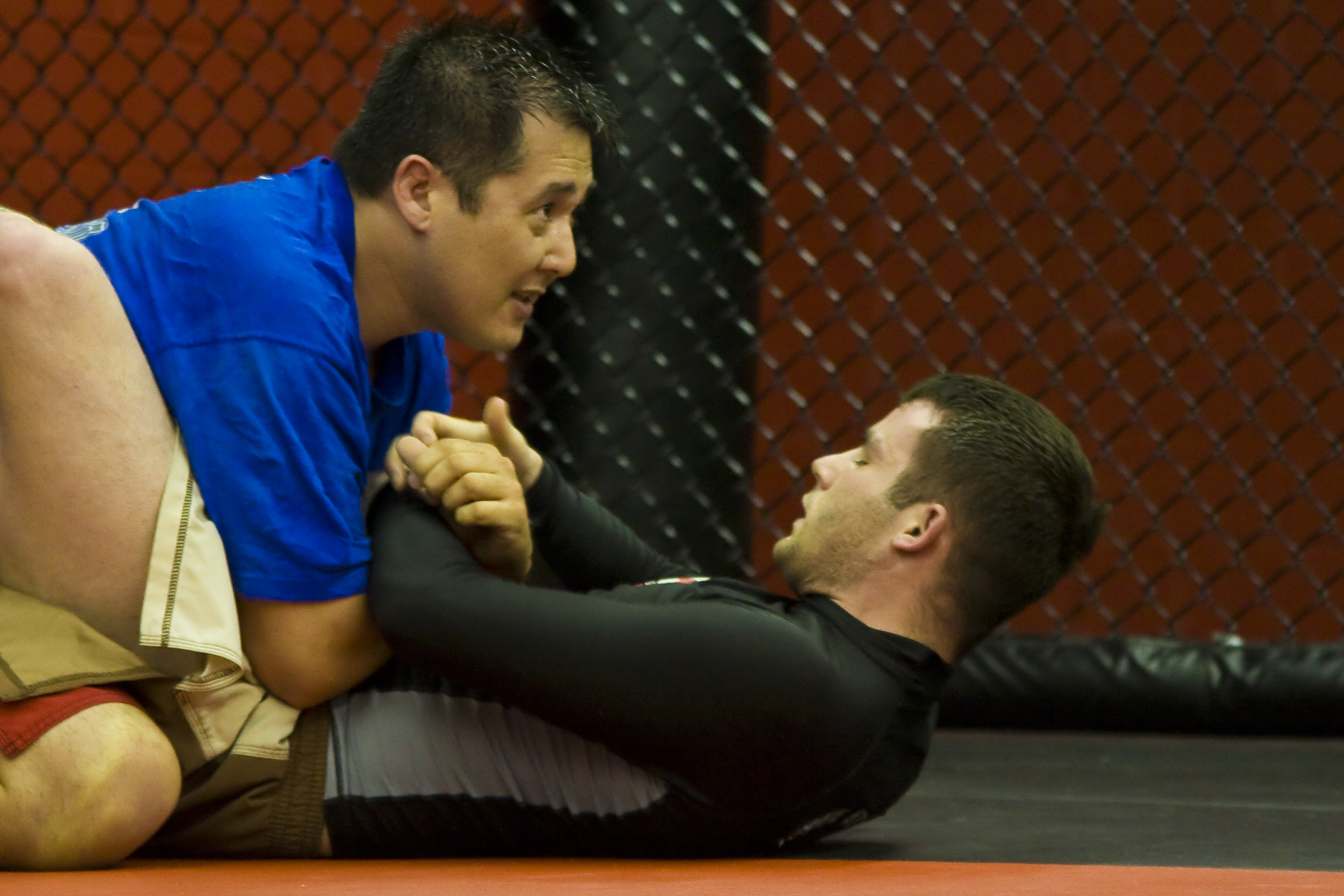
BJJ and Catch Wrestling: Two Different Approaches to Grappling
At their core, Brazilian Jiu-Jitsu and Catch Wrestling are trying to solve the same fundamental problem:
How do I control another person and make them submit?
However, the two systems often approach that problem differently.
BJJ traditionally places significant emphasis on positional hierarchy. Guard, side control, mount, back control, and other positions provide a framework for progressing toward a submission.
Catch Wrestling developed from wrestling and submission-grappling traditions where pinning, riding, pressure, control, and submission attacks were closely connected.
A BJJ practitioner may ask:
“What position am I in, and what submission can I work toward?”
A Catch Wrestling approach may be more likely to ask:
“How can I control this person, disrupt their movement, make them carry my weight, and attack while they are trying to escape?”
Neither approach is inherently better.
Combining them can make both better.
BJJ vs. Catch Wrestling
| Category | Brazilian Jiu-Jitsu | Catch Wrestling |
|---|---|---|
| Primary emphasis | Position, control and submissions | Control, riding, pressure and submissions |
| Guard | Highly developed and central to many styles | Generally less central |
| Top game | Positional progression and submission | Heavy pressure, rides and continuous attacks |
| Bottom game | Extensive guard systems | Escapes, reversals and submission counters |
| Pins | Present, but emphasis varies | Historically a major component |
| Wrestling | Varies by practitioner and academy | Fundamental influence |
| Leg attacks | Extensive in modern BJJ | Strong submission tradition |
| Neck attacks | Guillotines, rear-naked chokes, triangles, etc. | Strong emphasis on neck attacks and related controls |
| Wrist attacks | Part of the BJJ submission arsenal | Often heavily emphasized |
| Riding | Present, but varies considerably | Major emphasis |
| Submission philosophy | Often position → control → submission | Control → attack → submission |
| Scrambling | Increasingly important in modern BJJ | Fundamental to the wrestling-based approach |
| Training mentality | Technical positional development | Pressure, control, scrambling and continuous attacks |
The differences between the arts aren’t necessarily weaknesses.
They are opportunities for cross-training.
1. Catch Wrestling Can Make Your BJJ Top Game More Dangerous
One of the biggest benefits a BJJ practitioner can gain from Catch Wrestling is learning to become more aggressive from the top.
Many BJJ practitioners become very good at maintaining positions.
Catch Wrestling can teach you to attack while maintaining those positions.
Instead of simply establishing side control and waiting for the next positional opportunity, you can learn to continuously look for:
- Wrist controls
- Head-and-arm attacks
- Neck attacks
- Shoulder locks
- Leg attacks
- Pins
- Rides
- Submission opportunities
- Transitions between attacks
The goal isn’t simply to hold your opponent in place.
The goal is to make them defend continuously.
Every defensive reaction can create another opportunity.
That mentality can turn a competent BJJ top player into a much more dangerous submission hunter.
2. Catch Wrestling Can Improve Your Riding Game
This is one of the biggest areas where Catch Wrestling can complement BJJ.
Wrestling teaches athletes how to stay on top of an opponent who desperately wants to escape.
Catch Wrestling combines that wrestling mentality with submission grappling.
That creates a powerful sequence:
Wrestle → Control → Ride → Attack → Force a Reaction → Attack Again
A BJJ practitioner who develops a strong riding game can become extremely difficult to escape.
Instead of simply passing the guard and settling into side control, you begin thinking about maintaining control through continuous transitions.
Your opponent doesn’t get to simply establish their preferred guard or reset.
You are making them work.
3. Catch Wrestling Can Change the Way You Think About Scrambles
Modern submission grappling is increasingly wrestling-oriented.
The ability to scramble, recover position, attack legs, control the head, and maintain pressure is extremely valuable.
Catch Wrestling can help develop that mentality.
Instead of viewing a scramble as something that happens when positional control breaks down, you can begin viewing the scramble itself as an opportunity.
Your opponent stands?
Attack.
They turn?
Attack.
They expose a leg?
Attack.
They post an arm?
Attack.
They try to escape?
Attack.
This creates a very different rhythm from a purely positional game.
4. Catch Wrestling Adds Different Submission Attacks
Brazilian Jiu-Jitsu already has an enormous submission arsenal.
However, Catch Wrestling can introduce attacks and combinations that may be less familiar to a traditional BJJ practitioner.
These can include:
- Wrist locks
- Neck attacks
- Shoulder locks
- Compression-style attacks
- Leg attacks
- Twisting submissions
- Pin-to-submission combinations
- Unconventional submission entries
Some Catch Wrestling techniques may not be legal under certain BJJ competition rules.
That doesn’t make them useless.
It means you need to understand the ruleset under which you are training and competing.
For MMA, submission grappling, and broader martial-arts training, understanding a wider range of attacks can make you considerably harder to predict.
5. Learning Catch Wrestling Can Improve Your Submission Defense
One of the unexpected benefits of learning another submission system is that it teaches you how other grapplers attack.
If you only train against people who use the same positional concepts and submission systems you use, you can develop predictable defensive habits.
Training with Catch Wrestling practitioners exposes you to different:
| Area | What You May Experience |
|---|---|
| Grips | Different methods of controlling the hands and limbs |
| Pressure | More aggressive top pressure and riding |
| Angles | Unfamiliar submission angles |
| Controls | Different methods of controlling the head, wrist and limbs |
| Entries | Different ways of entering submissions |
| Transitions | More attacks during movement and scrambles |
| Finishes | Submission mechanics that may be unfamiliar to traditional BJJ practitioners |
Understanding how another grappler wants to attack you can make your defense better.
One of the best ways to learn how to defend a submission is to understand how someone intends to submit you.
6. Catch Wrestling Can Make You Better From Bad Positions
One of the most important lessons in grappling is that you don’t always get your favorite position.
Your opponent may have better wrestling.
They may pass your guard.
They may take your back.
They may put enormous pressure on you.
They may force an unexpected scramble.
Catch Wrestling’s wrestling-heavy nature can help develop a mentality of constant resistance and counterattack.
Instead of thinking:
“I need to get back to my guard.”
you can begin thinking:
“How can I create an opening right now?”
That shift is important.
Good grapplers don’t simply survive bad positions.
They create problems from them.
7. Catch Wrestling Can Improve Your Grip Fighting
Grip fighting is one of the most important but sometimes overlooked aspects of grappling.
Controlling the hands, wrists, head, and limbs can determine whether a submission opportunity exists in the first place.
Catch Wrestling places considerable importance on controlling the opponent’s body while preventing them from establishing their own controls.
That can make your BJJ grips more purposeful.
Instead of simply grabbing a wrist or collar because it is familiar, you begin asking:
What does this grip allow me to control?
What attack does it create?
What reaction will it force?
That makes grip fighting part of your offensive strategy rather than simply a way to establish position.
8. Catch Wrestling Can Be Valuable for MMA
BJJ and MMA have always had a strong relationship, but MMA grappling is different from pure sport BJJ.
In MMA, a grappler has to deal with:
- Striking
- Takedowns
- Wall wrestling
- Scrambles
- Ground-and-pound
- Limited space
- Different positional priorities
A grappler who can control an opponent while continuously attacking submissions can be extremely effective.
Catch Wrestling’s emphasis on wrestling, rides, pressure, and submissions can complement BJJ particularly well in this environment.
Instead of treating wrestling and submissions as separate phases, you begin blending them together.
9. Catch Wrestling Can Eliminate “Style Tunnel Vision”
Every martial art develops habits.
BJJ practitioners have them.
Wrestlers have them.
Catch wrestlers have them.
Judo practitioners have them.
MMA fighters have them.
The problem isn’t having a style.
The problem is becoming trapped inside it.
Cross-training exposes weaknesses you may not realize you have.
A BJJ practitioner may discover:
“I’m much better at controlling people from my guard than I am at keeping someone down.”
Or:
“I have good submissions, but I struggle to force someone into them.”
Or:
“My positional knowledge is good, but my scrambling isn’t.”
Those discoveries are valuable.
Your weaknesses tell you what you need to work on.
BJJ Doesn’t Need to Be Replaced
This is perhaps the most important point.
A BJJ practitioner shouldn’t learn Catch Wrestling because BJJ is inadequate.
BJJ is extremely effective.
Instead, learn Catch Wrestling because you want more weapons.
Think of Catch Wrestling as another layer that can be added to your existing game.
| Your BJJ Game | Catch Wrestling Can Add |
|---|---|
| Guard systems | More emphasis on wrestling and top control |
| Positional control | Riding and pressure |
| Escapes | Additional scrambling and counterattack concepts |
| Submissions | Additional and unconventional submission attacks |
| Passing | More aggressive pressure and control |
| Back control | Additional control concepts |
| Defensive skills | Exposure to different attacks |
| Technical movement | More wrestling-oriented movement and pressure |
Put the two together and you can develop a much more complete submission grappling game.
The Best Grapplers Are Adaptable
The history of grappling repeatedly demonstrates the value of cross-training.
Wrestlers learn submissions.
BJJ practitioners learn wrestling.
Judoka learn ground fighting.
MMA fighters combine multiple disciplines.
The modern grappler doesn’t have to live inside one box.
The goal isn’t to become “pure.”
The goal is to become effective.
If a Catch Wrestling technique improves your BJJ, use it.
If a wrestling technique improves your ability to pass guard, use it.
If a BJJ technique improves your ability to finish from a Catch Wrestling position, use it.
There is no reason to artificially separate techniques simply because they originated in different grappling traditions.
How a BJJ Practitioner Should Start Learning Catch Wrestling
You don’t have to abandon your BJJ training.
In fact, you shouldn’t.
A good approach is to incorporate Catch Wrestling concepts into your existing training.
Start with these areas:
| Area | What to Develop |
|---|---|
| Wrestling | Better takedowns and takedown defense |
| Rides | Ability to maintain top control |
| Pins | Controlling movement and creating submission opportunities |
| Wrist control | Better control of the opponent’s hands and arms |
| Neck attacks | Using head control as an offensive weapon |
| Leg attacks | Expanding your lower-body submission knowledge |
| Scrambling | Attacking during transitions |
| Submission chains | Making one defensive reaction create another attack |
You don’t need to completely rebuild your BJJ game.
Add tools to it.
The Real Advantage: Becoming Uncomfortable to Grapple
Perhaps the greatest benefit of learning Catch Wrestling is that you become harder to predict.
A BJJ practitioner who only knows traditional BJJ may develop a recognizable game.
A wrestler who doesn’t understand submissions may have another.
But someone who can combine:
BJJ + Wrestling + Catch Wrestling
can create a very different problem.
They can:
- Wrestle
- Pass
- Control
- Ride
- Pin
- Scramble
- Attack the legs
- Attack the neck
- Attack the wrists
- Submit from transitions
- Create problems from bad positions
- Continue attacking when their opponent thinks the position has stabilized
That’s what makes cross-training so valuable.
Frequently Asked Questions
Is Catch Wrestling better than BJJ?
Not necessarily.
They are different grappling systems with different historical development, training methods, and areas of emphasis.
The better question is:
What can each system teach you that makes you a better grappler?
For many BJJ practitioners, Catch Wrestling provides valuable skills that complement their existing game.
Can a BJJ practitioner learn Catch Wrestling without giving up BJJ?
Absolutely.
In fact, combining the two can be one of the most productive ways to cross-train.
You can continue developing your BJJ guard, positional control, escapes, and submissions while adding Catch Wrestling’s emphasis on wrestling, riding, pressure, and continuous attacks.
Will Catch Wrestling improve my BJJ?
It can and it will.
The biggest potential improvements are often in areas such as:
- Top pressure
- Wrestling
- Riding
- Scrambling
- Grip fighting
- Submission variety
- Control
- Aggressiveness
- Counterattacks
The amount of improvement will depend on the quality of instruction and how effectively you integrate the techniques into your existing game.
Is Catch Wrestling useful for MMA?
Yes.
The combination of wrestling, control, pressure, riding, and submission attacks can translate well to MMA.
However, MMA requires additional training in striking, takedowns, cage work, conditioning, and other skills beyond either BJJ or Catch Wrestling.
Conclusion
Brazilian Jiu-Jitsu and Catch Wrestling aren’t enemies.
They are two different branches of the larger grappling tree.
BJJ provides an incredibly sophisticated system for controlling and submitting an opponent.
Catch Wrestling can add a harder-edged wrestling mentality built around pressure, rides, pins, control, scrambling, and continuous submission attacks.
For the experienced BJJ practitioner, the question shouldn’t be:
“Which one is better?”
The better question is:
“What can I learn from Catch Wrestling that makes my BJJ better?”
The answer can be substantial.
Learn to wrestle better.
Learn to ride.
Learn to control.
Learn to attack during scrambles.
Learn submissions you aren’t accustomed to seeing.
Learn how to make your opponent defend continuously.
Then bring those skills back to your BJJ.
You don’t have to become less of a BJJ practitioner.
You become a more complete grappler.
Don’t limit your grappling game to one system.
Build the most effective game you can.